

The 4-4-2: why it doesn't work and how to fix it
Why isn't your 4-4-2 working? The classic mistakes made by midfielders and strikers, and how to fix your football system of play.
LES SYSTÈMES DE JEU
3/4/20268 min read
Why your 4-4-2 isn't working (and how to fix it)
The 4-4-2 isn't dead. But 9 teams out of 10 play it badly. And if your team struggles with this system… it's probably because of these mistakes." Most of the time, people set up a 4-4-2 because they think it's a simple system: 4 defenders, 4 midfielders, 2 strikers, no overthinking, park the bus in front of goal.
Except that in reality it creates problems with the block, the lines, the press, and much more, and in the end you spend the whole match under pressure.
Sit down, champ, because we're going to see why your system isn't working, how to fix it, and simply how to play it and set it up.
I can see a few smart alecks coming, so before we start: every system has strengths, weaknesses and specific player profiles, but the most important thing is how the team moves on the pitch, and that brings us to the first problem.
The mistake is thinking it's an easy system. The 4-4-2 is not a "simple" system that needs no adjustment or input from the coach, otherwise you end up with stretched lines, a block split in two and a non-existent press.
The 4-4-2 demands a huge amount of coordination, between the players but above all between the lines.
🎧 Watch in English: on YouTube, click ⚙️ Settings › Audio track › English. You can also turn on English subtitles in ⚙️ Settings › Subtitles.
Let's start with the attacking problems.
The first is the role of the strikers.
A classic problem: 2 strikers in a line, passive, waiting for the ball.
The mistakes: nobody drops deep, no complementarity (target man / runner in behind), a disorganised press.
Running around like headless chickens in every direction is not a solution.
The coach's mistake is not clearly defining the role of the two strikers.
The coach must specify the roles: who directs the press, who drops deep, who attacks the space in behind and who covers him. Two different profiles that complement each other.
The second problem is using "flat" central midfielders, a problem both in attack and in defence, which we'll look at later!
If you're a coach, change that!
The mistake is having two midfielders on the same line, either too high or too low.
So you have a huge space problem between the lines,
no cover in the middle, and difficulty playing out cleanly.
In the modern 4-4-2, you need a more mobile box-to-box midfielder,
in other words just as good defensively as offensively, who plays between the lines, and another, more positional midfielder to protect the defence. Here again, the players always complement each other.
The third problem is stereotyped wide midfielders.
Wide midfielders are used as simple wingers. The result: attacks down the flanks almost never have any impact, they end either in a cross or in a goal kick. Everyone always knows their direction, their objectives and their decisions, which makes them easy to defend because they're so predictable.
The mistake is that they never come inside.
Non-existent in the half-space, both in attack AND in defence.
And they leave the full-backs exposed when the ball is lost.
Wide midfielders are hybrids:
you need to teach them that they are wingers + midfielders + defenders, depending on the phase of play.
And the fourth problem is stereotyped build-up play.
The 4-4-2 is associated with a low block, so when playing out, the ball systematically goes long to the strikers.
No support
Two strikers surrounded
Ball given straight back
Defensive problems, transition problems: without movement from the midfielders and full-backs, the 4-4-2 is sterile.
Which brings us to the defensive problems.
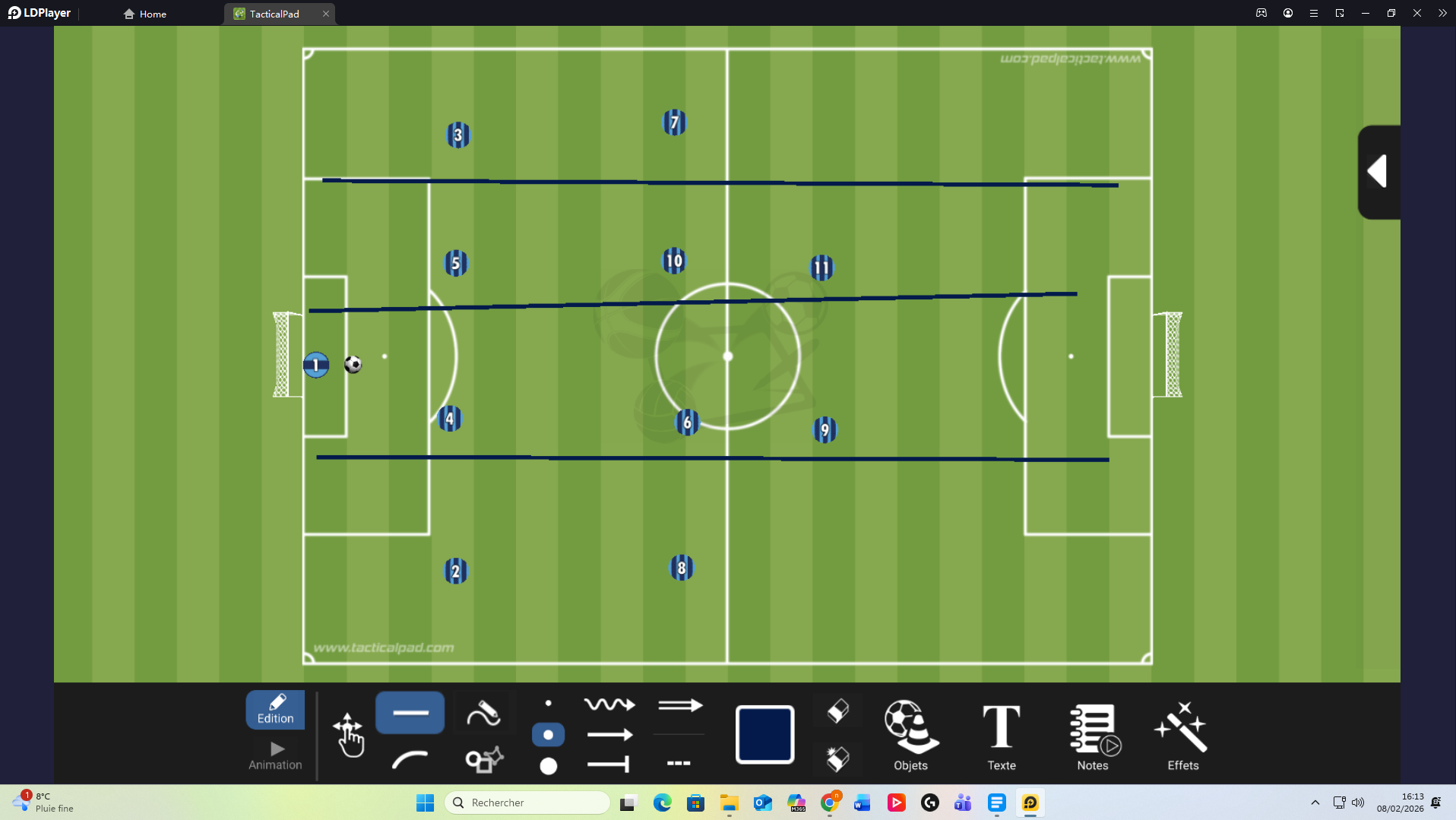
The first mistake is defending by position: a problem of lines.
Players stay frozen in their channel.
The mistakes: no shifting across
No cover in the middle
Huge spaces in their channel
You have to defend as a block, not in fixed boxes; every player must cover a teammate.
The second problem is a lack of vertical compactness: a stretched block, problems between the lines.
The distances between the lines are too big.
Midfield and attack, defence and midfield.
The opponent plays between the lines and the midfielders run around chasing nothing.
You cover on the same line but also between the lines:
one line must always cover another, with a maximum of 30 m between the first and the last line.
The third problem: the press.
The strikers are passive off the ball.
They must direct the press and screen the opposing midfielders; the strikers are the first defenders.
If the attack doesn't press well, it doesn't force the opponent into mistakes and our midfielders will find it harder to win the ball back: you lose a line of defence very easily.
And the fourth problem is wide midfielders who forget the defensive transition.
After losing the ball: late recovery runs, no tracking back into the middle.
You usually end up with a full-back outnumbered, or with easier crosses for the opponent.
Wide midfielders tracking back is NON-NEGOTIABLE.
The 4-4-2 fails when:
· It is static
· It lacks coordination
· Roles are not clearly defined
The 4-4-2 works when:
· The lines are compact
· The roles are complementary
· Players understand the principles, not just the positions
Identifying and understanding the mistakes is already a huge step towards improving your system of play. Now you need to understand how to position yourself, the strengths and weaknesses, and the typical characteristics of players in each position.
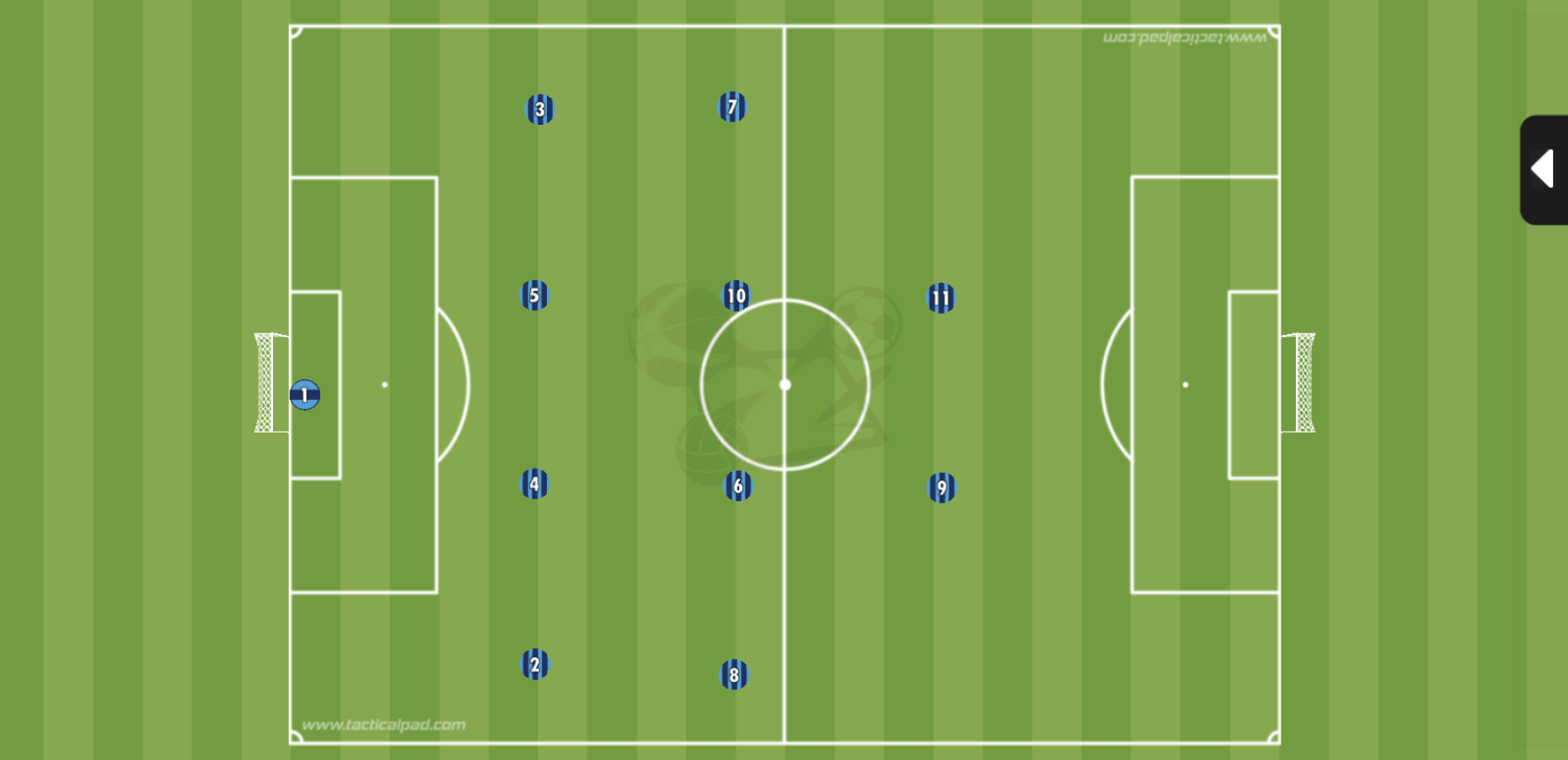
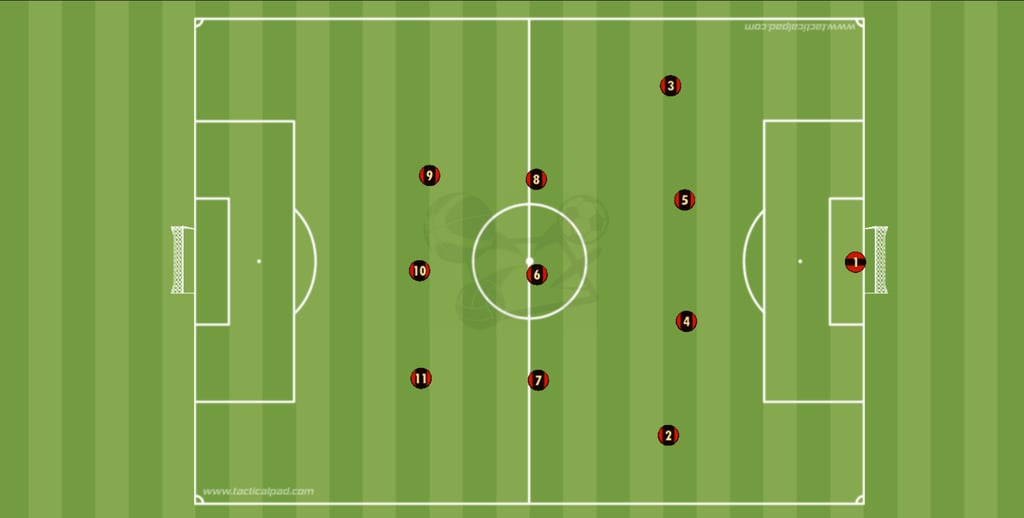
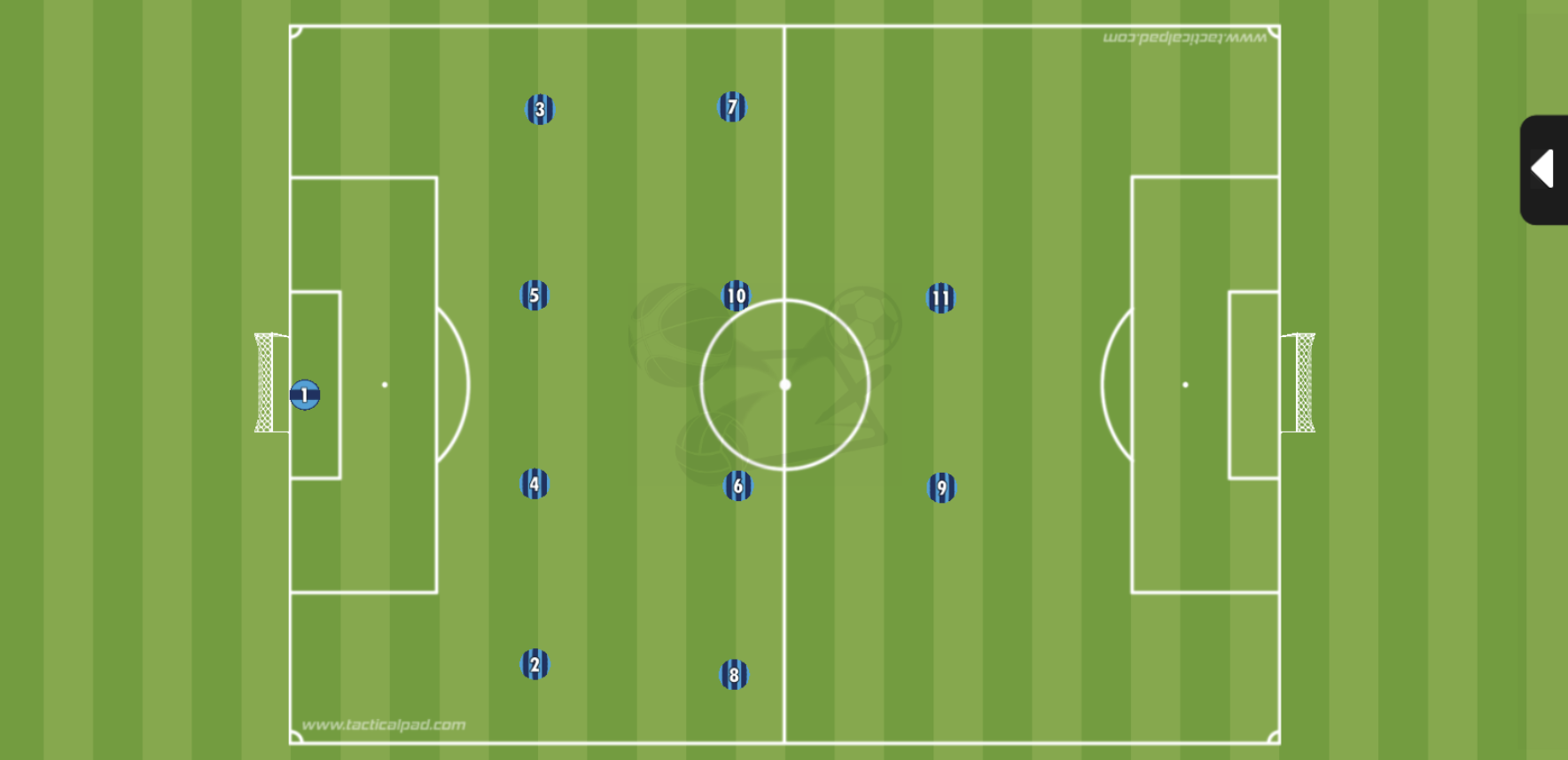
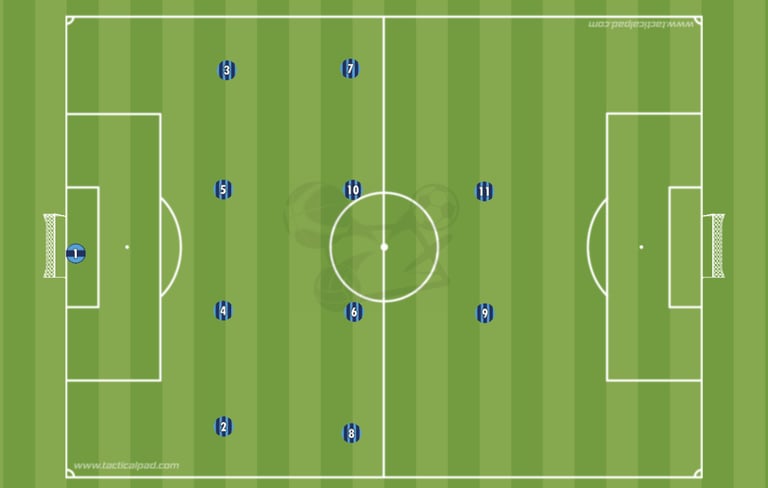
The 4-4-2 is 4 defenders, 4 midfielders and 2 strikers, we agree, but there isn't just one way of placing players on the pitch, there are 2.
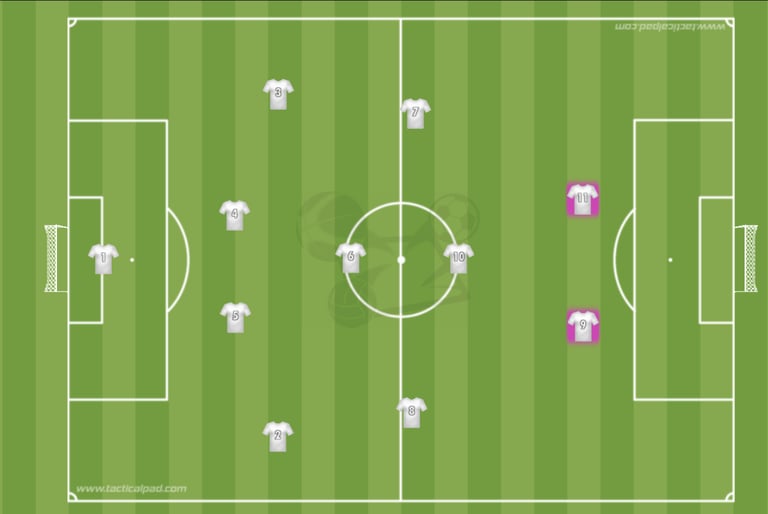
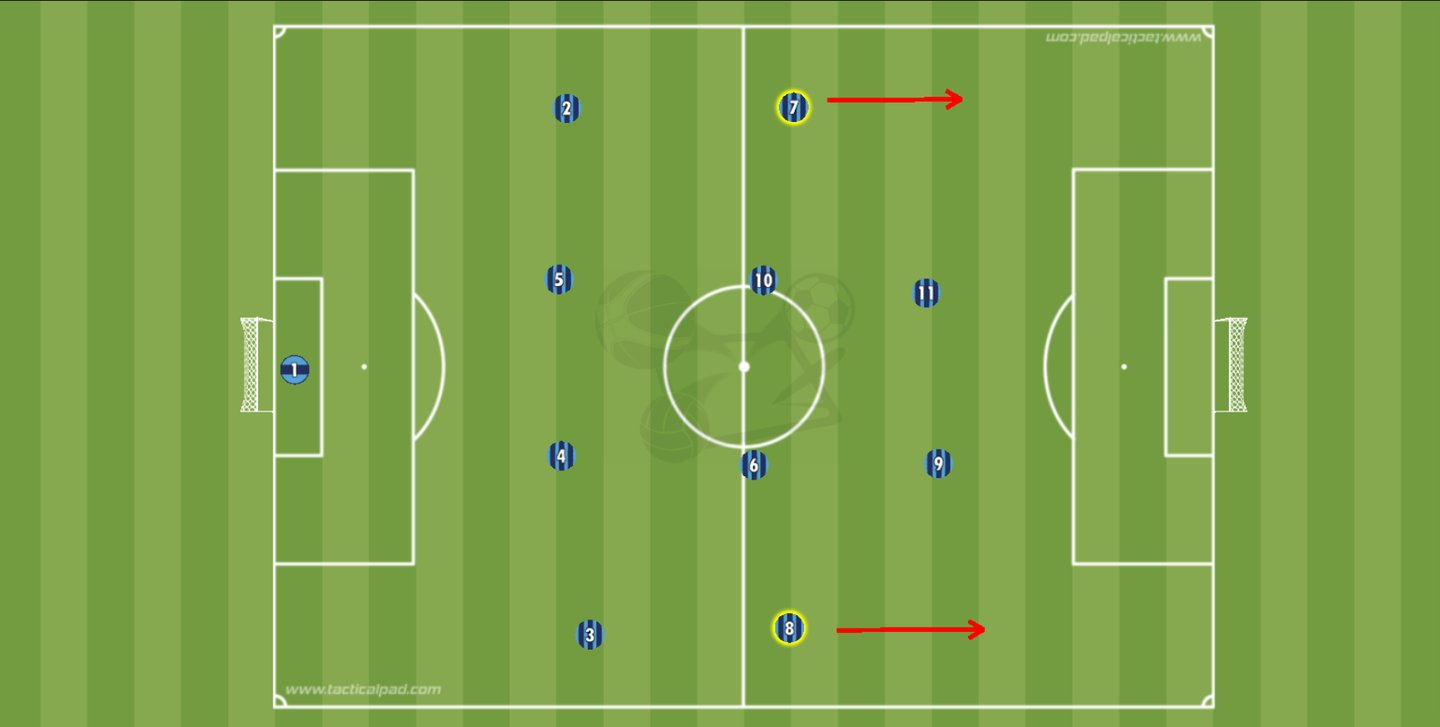
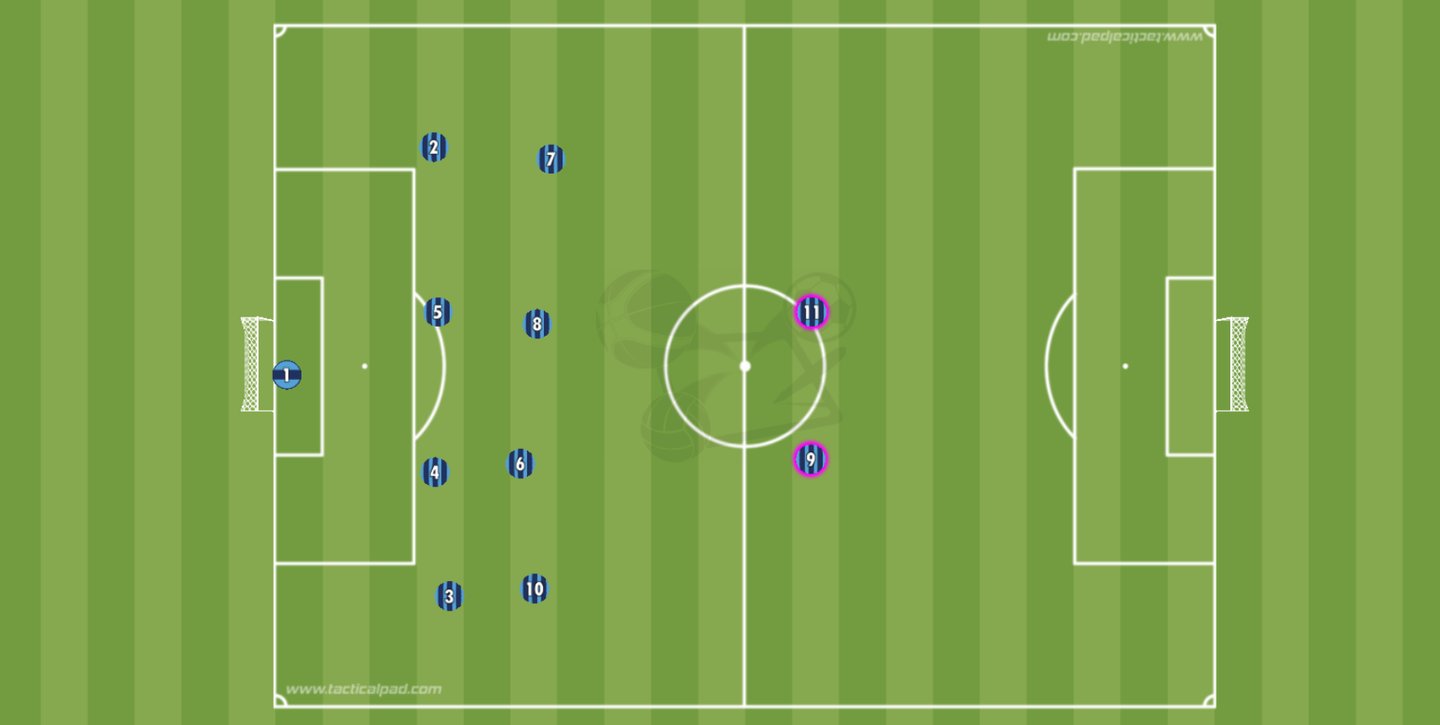
The first version is the classic flat 4-4-2: each line is aligned and covers the whole width of the pitch.
The strengths of this version
- Defensive balance
- The game is simple to read
- Good cover on the flanks
But it does have weaknesses
- Little presence between the lines
- Very dependent on crosses
- Hard to press high
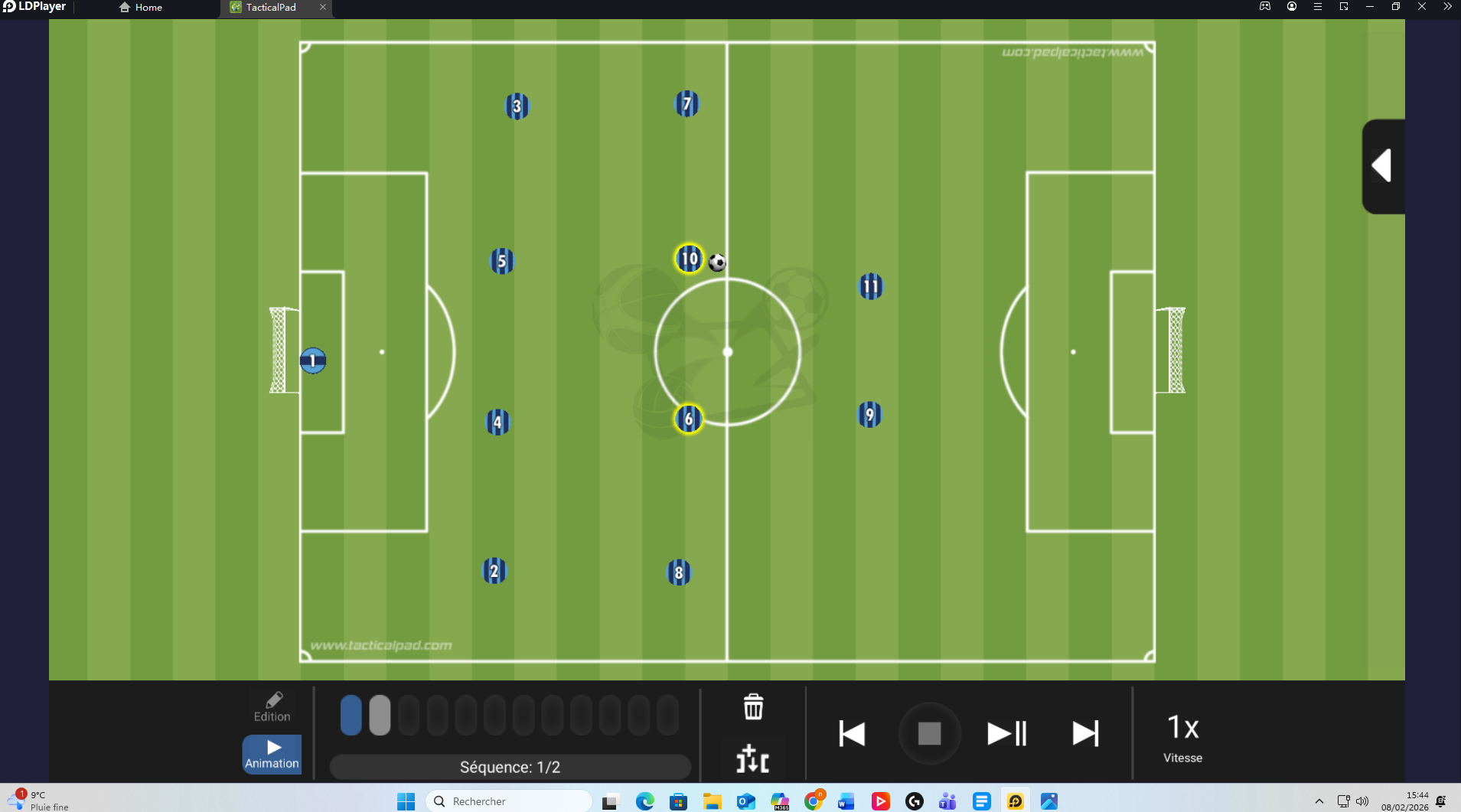
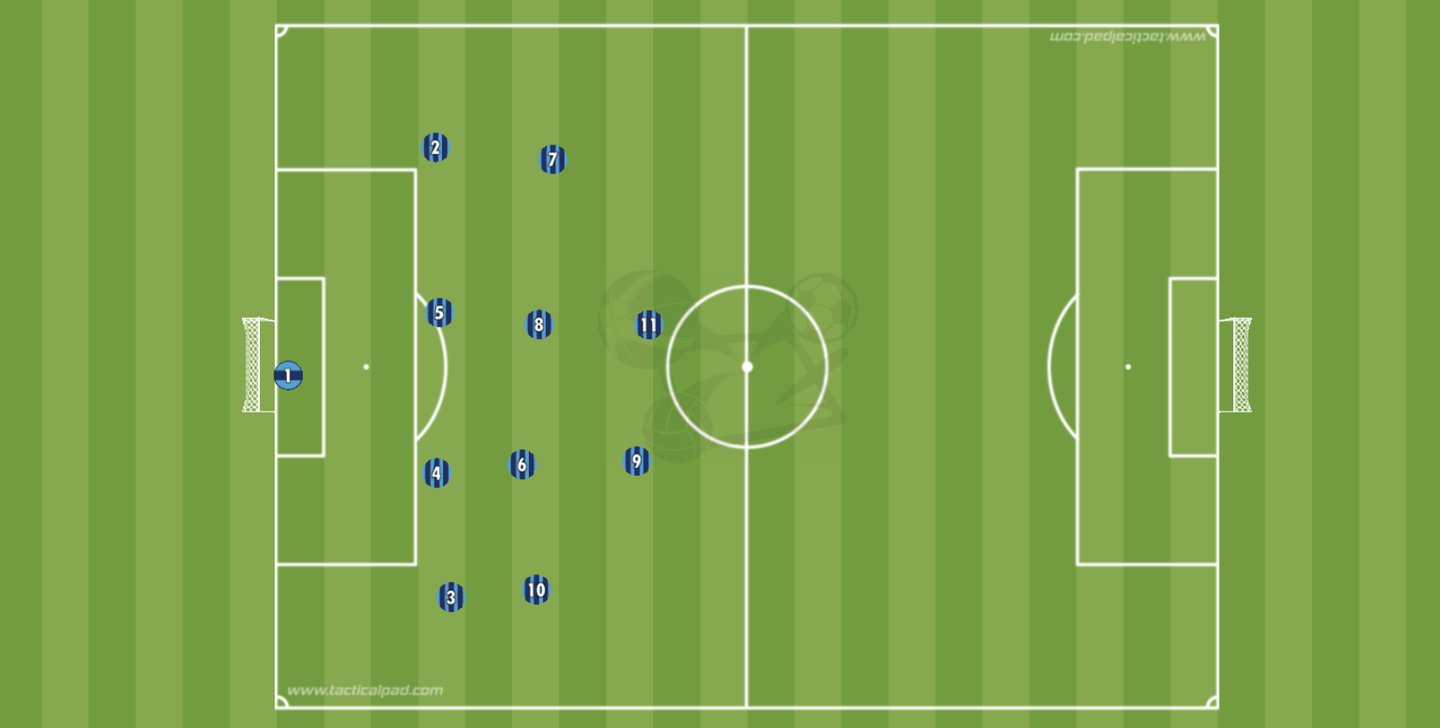
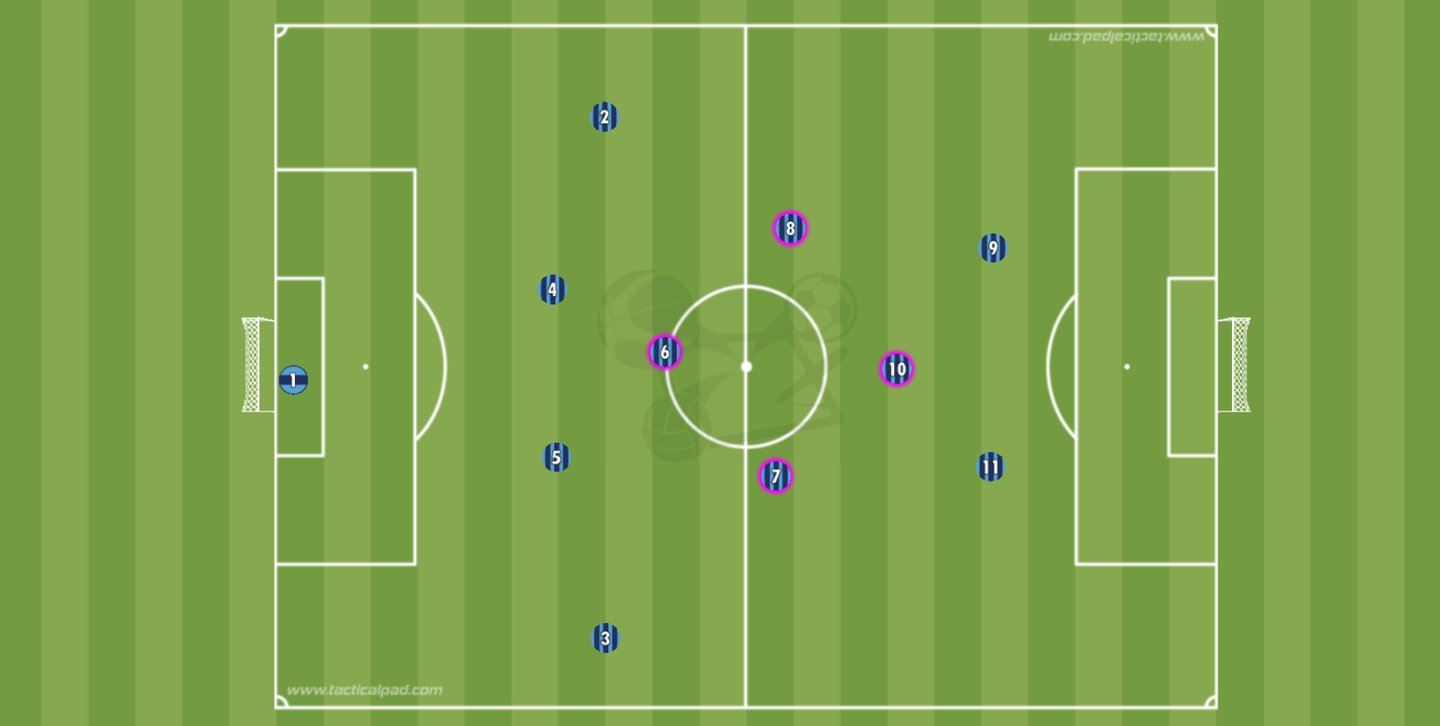
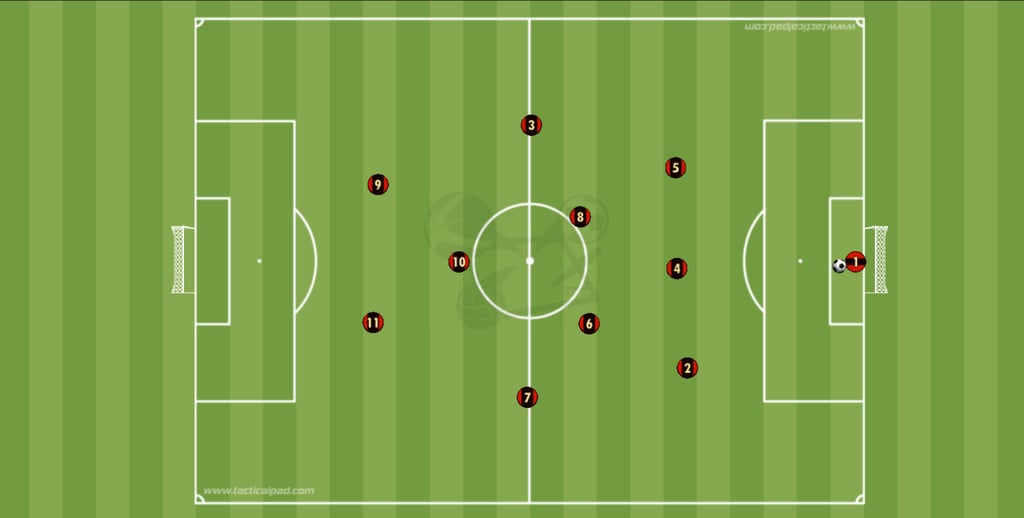
And the second version is the diamond 4-4-2, a special version that allows a different style of play. This time the positioning of the midfielders changes: you play with a number 6, two central linking midfielders and a number 10, with no real wingers.
It's the most interesting version but also the one that demands the most coordination and vision. The 4 midfielders give density in the middle, play between the lines and above all free space for the full-backs, who will be more wing-backs than defenders and can create very effective combinations. However, it requires good reading of the game in transitions so you don't get caught out on the flanks.
That's why its strengths are
- Numerical superiority in the middle
- Mobile full-backs
- Better positioning
- Play between the lines
- Short connections
However, it has weaknesses you shouldn't overlook
- Exposed flanks
- A big workload for the full-backs
- Coordination and game reading in transitions when the ball is lost
- Vulnerable to switches of play
This diamond system also requires specific profiles. As a reminder: good linking midfielders, a number 10 and very athletic full-backs who read the game well defensively.
So when should you use the 4-4-2?
First, it's effective against the 4-3-3:
midfielders who shift across well,
strikers who close off the middle to avoid being outnumbered,
a press that steers play towards the flanks.
The aim: shut down every central build-up option, so the opposing midfielders disappear and the front three have little impact.
It's also effective against the 3-5-2:
your wide midfielders do the defensive work by leaving their zone, the full-backs cover them, and when you win the ball back you exploit the weakness of the 3-5-2 wing-backs, which leaves the field open for your wingers.
However, the 4-4-2 will struggle against all hybrid formations such as the 4-2-3-1 / 4-3-1-2 / 3-4-2-1.
Because when these systems are played well, you'll face imbalances between the lines, occupied half-spaces and permanent overloads in the middle.
You'll need a midfielder who steps out strongly and is very mobile, but that can unbalance your line,
or you defend deep to reduce the impact of their play between the lines.
Don't forget:
The 4-4-2 works if:
· Principles take priority over positions
· Players understand when to step out and when to shift across
· Roles are adapted to the profiles, not the other way round
It fails when:
· You want to "copy a system" without training it
· You lack tactically intelligent players
Let's finish with the ideal roles for each position, so you know which position suits your players.
Goalkeeper Nothing changes: we ask them to be complete in every area. A good goalkeeper changes your life and takes a mental weight off the defence.
The defenders
The centre-backs Ideally you want a "covering" centre-back
who reads the game and anticipates,
and is good at playing out from the back,
and a "stopper", in other words one who wins every aerial and ground duel and is aggressive on strikers who drop deep (while keeping track of teammates for the offside line).
The two centre-backs cover each other and must cover the full-backs.
The full-backs
A hybrid role: defending comes first, obviously, but they make selected attacking contributions, not permanent ones. They have to read the game to know when to attack.
For example, push up when the wide midfielder comes inside,
drop back if that player moves back out wide.
Reading the game in defensive transition: when to press, when to delay, when to drop. Full-backs can often find themselves outnumbered in defence if an imbalance is created, so good game reading is essential.
And finally, protect the far post.
The midfielders
First, the central midfielders:
you need 1 defensive midfielder, who protects the middle and directs play,
and 1 box-to-box midfielder, just as good defensively as offensively: the Swiss army knife, very mobile, getting forward, pressing and supporting the strikers.
The wide midfielders
Without the ball, they must be able to shift inside rather than only defending their channel, help out defensively all the time and track back quickly when the ball is lost.
With the ball, they mix width and coming inside to create uncertainty and force the opposing defence into mistakes, and vary all types of crosses from every position (not only from the wing) after drawing defenders, without rushing.
Intelligent players who cover a lot of ground.
And finally, the strikers:
1 target striker, playing with his back to goal, holding the ball up and laying it off,
and the other mobile and running in behind:
diagonal runs, dropping deep, pressing.
In this duo there are no mirror players: they are players who complement each other.