


K-Taping and strapping: differences and uses in football
K-Taping or strapping: what are the differences, what are they for and when should you use them in football to prevent an injury or support a joint?
PRÉPARATION PHYSIQUE
10/23/202511 min read
Introduction to K-Taping and strapping
K-Taping and strapping are two techniques widely used in sport to prevent injuries and treat musculoskeletal pain. Although they are often confused, each has its own distinct characteristics that meet specific needs.
In sport, it's essential to understand the differences between K-Taping and strapping in order to choose the most appropriate method for each situation. Using these techniques can contribute to better performance, injury prevention and faster recovery. Each approach has its own advantages, and it's crucial for athletes and coaches to master these tools to maximise safety and effectiveness.
What is K-Taping?
K-Taping, or kinesiology taping, is a taping method developed in Japan in the 1970s by Dr Kenzo Kase. The technique involves applying an elastic adhesive tape to the skin to support muscles and joints while allowing some freedom of movement. Unlike traditional bandages that completely immobilise the injured area, K-Taping is designed to promote blood and lymph circulation, which helps healing be faster and more effective.
What makes K-Taping distinctive is its flexibility and elasticity. The tape is made from an elastic material that mimics the properties of skin, allowing athletes to keep training without restriction. The aim is to reduce pain and minimise inflammation while maintaining good muscle function. The tape can be applied in different ways depending on the injury and the therapeutic goals.
Applying K-Tape requires specific skills. Trained practitioners first assess the patient's condition before choosing the right application technique. The tape is usually applied with varying tension, linking the muscles and joints involved to optimise support. One of K-Taping's great strengths is its ability to activate the body's sensory receptors, improving proprioception and helping to correct movement. K-Taping has also been widely adopted by athletes for its ability to prevent injuries while supporting a quick recovery when an injury does occur, which makes it a valuable tool in sport and rehabilitation.
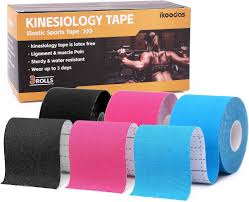
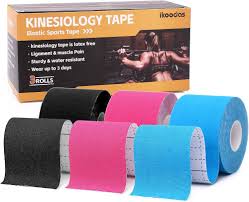
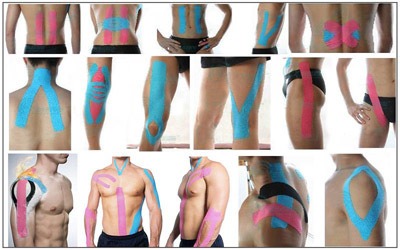
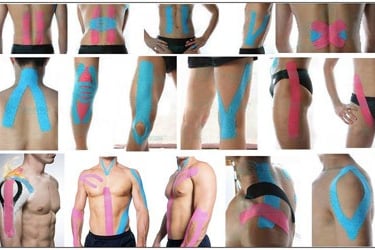

Advantages and disadvantages of K-Taping
K-Taping, or kinesiology taping, is a taping technique widely used by athletes to prevent injuries and manage pain. One of its main advantages is that it provides muscle support without restricting mobility. This flexibility allows athletes to keep training while benefiting from a certain level of protection. K-Taping can also help improve blood and lymph circulation, which can support faster recovery after exercise.
Another advantage of K-Taping is its ability to act on pain perception. By stimulating the skin's sensory receptors, K-Tape can ease pain and help athletes better manage their body sensations during exercise. This approach is particularly appreciated in rehabilitation, where a non-invasive approach is often preferred.
K-Taping has other advantages too, such as
• Reducing inflammation and pain
• Improving blood circulation
• Supporting joint function
• Correcting posture and improving coordination
• Stimulating healing
• Stimulating proprioception
• Supporting the muscles
Depending on the tension applied to the tape, certain therapeutic effects can be observed: thanks to the signals sent to the body's various receptors, joints, muscles and tendons are stimulated.
It has also been found that people wearing this type of tape feel more capable and confident, and the patient's emotional state is very important in any treatment. K-Tape also has a positive effect on the muscles, providing support, stability and relaxation. Its stimulating effect on proprioception is also worth mentioning.
K-Tape must be positioned correctly for the best effect. Applying it is simple: just remove the backing without touching the adhesive side. However, the direction of the tape is very important, because it influences sensory and proprioceptive perception, improving the stretch reflex and restoring good joint mobility. And as mentioned earlier, the effects differ depending on the tension: the tighter it is, the more pressure it puts on the area; with little tension, it allows the muscle to rest and supports drainage.
K-Taping comes from professional sport, for all the effects listed above and ultimately to optimise sporting movement and performance. It's also used for bruises, tears and other injuries such as tendinopathies.
It has become widespread and is now found in amateur sport too: football, basketball, volleyball, tennis and so on.
It's now also used in the medical world, for example by physiotherapists and osteopaths, and for pregnant women, where it helps relieve back pain, sciatica and pelvic floor weakness after childbirth. In paediatric care, K-Tape can relieve common problems in newborns and can also be used to support the development of premature babies.
K-Taping is now popular in health and sport thanks to its many advantages: this therapeutic method offers a non-invasive way to relieve pain, improve physical performance and support healing.
However, K-Taping also has drawbacks. Although it's effective for many athletes, some research suggests its effects may be limited for more serious injuries or in situations where strong structural support is needed. In these cases, K-Taping may not be enough to stop an injury getting worse or to ensure optimal recovery time. The technique may also need to be learned and applied correctly to get the full benefit, which can be a challenge for users unfamiliar with it. Finally, it's crucial to note that K-Taping does not replace proper medical treatment. Athletes should always consult health professionals for personalised advice in case of injury.
Advantages and disadvantages of strapping
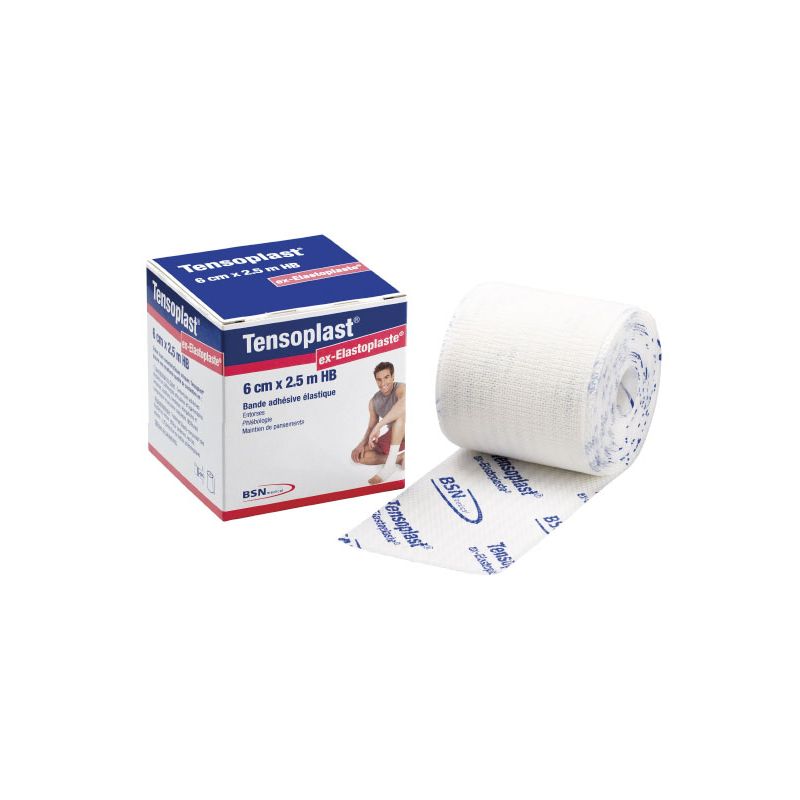
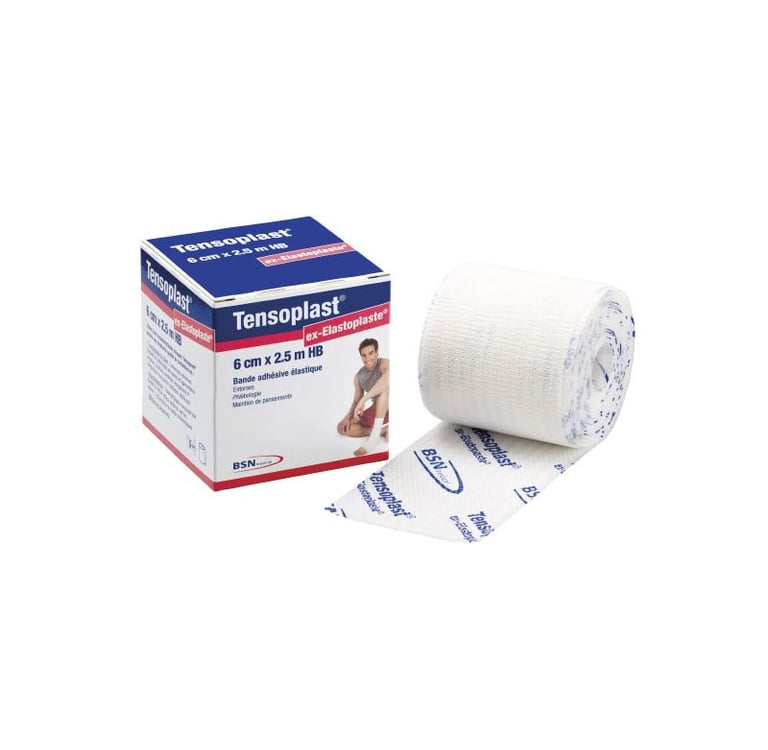
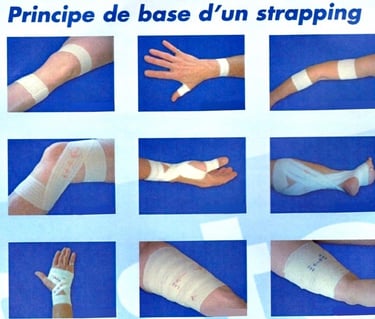
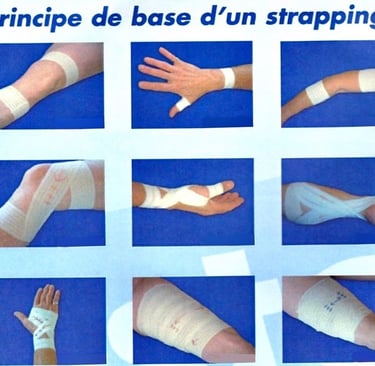
Strapping is an immobilisation technique mainly used in sport. It's a mechanical treatment for sports pain and injuries: a more or less flexible support technique made by criss-crossing tape to partially immobilise an injured joint, muscle or tendon.
It holds an affected joint or limb in a position where pain is reduced or absent, limiting further damage. Sometimes the strapping is applied as a preventive measure, to support a weakened joint.
Strapping is commonly used in sport to give joints extra support and prevent injuries. One of its main advantages is the strength of the adhesive tape: strapping provides firm support, which can be crucial for athletes doing repetitive movements or intense activity. Thanks to its ability to immobilise joints, strapping allows faster recovery by minimising the risk of serious injury. It's also relatively easy to apply and doesn't require specialist equipment, which makes it accessible to many athletes and coaches.
as well as other positive effects:
• Preventive: protecting limbs subjected to repetitive, sudden or painful movements, or protecting an injured or weakened limb
• Educational: it helps you feel which movements to avoid
• Therapeutic: it relieves pain and improves healing; applied at the moment of injury, it also has a compressive effect that helps clotting and prevents swelling
However, this technique also has drawbacks. One of the main limitations of strapping is that it can reduce the mobility of the joint concerned. Although this immobilisation can be useful in some contexts, it can also prevent a proper range of motion, which can affect the athlete's performance. Long-term use of strapping can also cause skin irritation or allergic reactions to the adhesive. These side effects raise questions about how sustainable it is as a long-term solution.
Unlike K-Taping, strapping creates real support. It's used preventively but above all on injuries such as sprains. You need to be careful when applying it, though: strapping that is too tight acts like a tourniquet, which is harmful because it stops blood circulation.
And
on the other hand, strapping that is too loose will have absolutely no effect.
Neither strapping nor K-Taping is a miracle product or a medical treatment for our body or our injuries: they are tools with benefits that help optimise and support specific aspects.
It's also essential to consider alternative treatments. For example, techniques such as physiotherapy, K-Taping or strength exercises can provide support while preserving mobility. These approaches target the sources of pain and injury in a more holistic way. Weighing up the pros and cons of strapping, it's clear that it should be used wisely, taking into account each athlete's specific needs.
Conclusion and recommendations for athletes
We've explored the differences between, and uses of, two taping techniques in sport: K-Taping and strapping. Each method has its own characteristics and meets specific needs depending on the nature of the injury and the type of activity. K-Taping, for example, is often used to promote blood and lymph circulation and to reduce pain, while strapping is sometimes preferred for its ability to provide more rigid support and immediate joint stabilisation.
For athletes, the choice between the two can depend on various factors, including the nature of the injury, the stage of healing and the specific demands of their sport. For example, for recent injuries or sprains, strapping may be more effective. For long-term support or rehabilitation, on the other hand, K-Taping may be more appropriate. So it's crucial to assess your personal needs carefully before choosing.
We strongly encourage athletes to consult health professionals, such as physiotherapists or sports doctors, for appropriate advice. These experts can make personalised recommendations based on an assessment of the injury and individual sporting demands. With this information, athletes will be better equipped to make informed decisions that support both their performance and their wellbeing.


The key differences between K-Taping and strapping
K-Taping and strapping are two techniques widely used in sport to prevent and treat injuries, but they have significant differences. One of the most notable is the elasticity of the tape used in each method. K-Taping uses elastic tape that allows some movement while providing support. This is essential to promote blood and lymph circulation, which helps reduce inflammation and supports healing. Strapping, on the other hand, uses rigid tape that immobilises the affected area more. This immobilisation is useful to avoid movements that could make an injury worse, but it can also restrict blood flow, sometimes limiting the supply of nutrients to the injured tissue.
Another key difference is the application technique. K-Tape is generally applied with a certain amount of tension, which triggers a response in the skin's receptors and encourages functional movement. Strapping, on the other hand, aims to stabilise the joint or muscle by applying the tape more tightly, restricting movement further. This can be particularly effective for acute injuries but less suitable for chronic injuries that require active recovery.
Finally, the effectiveness of each technique varies with the injury. K-Taping is often preferred for chronic pain and overuse injuries, whereas strapping is more effective for acute injuries that need immediate support. In summary, although K-Taping and strapping serve similar purposes, their different approaches in terms of elasticity, application and effectiveness make them complementary tools in sport.


What is strapping?
Strapping is a technique widely used in sport to give joints and muscles extra support and reduce the risk of injury. Essentially, strapping involves applying adhesive tape, usually made of cotton or synthetic materials, around the joints or muscle groups concerned. The aim is not only to stabilise anatomical structures but also to improve proprioception, which is the perception of the body's position and movement. With this support, athletes can feel more secure in their movements, which can help them perform at their best while minimising the risk of injury.
Several types of tape can be used for strapping. Elastic tape is commonly used to provide some flexibility while maintaining adequate compression; it's ideal for joints that need range of motion while being supported. Rigid tape, on the other hand, is often chosen when stabilisation is more critical, such as after previous injuries or for conditions that require prolonged support. The choice of tape largely depends on the sport and the athlete's specific needs.
Strapping is particularly useful in very dynamic sports such as football, basketball or gymnastics, where joints are under high stress. Coaches and sports therapists often recommend it when preparing for a competition or during training, especially for athletes returning from injury. Knowing how to apply strapping properly can therefore play a crucial role in preventing injuries and improving athletic performance.


🎧 Watch in English: on YouTube, click ⚙️ Settings › Audio track › English. You can also turn on English subtitles in ⚙️ Settings › Subtitles.